|
HUDDLESTONE COTTAGE AND THE HAYLOFT GARDENS |
||
|
Home | Garden Home | Dry Border | Betty's Border | Bog Area | Orchard | Photo Gallery | Rose Herb Lawn Winter2011 | Veggie Flower | Wildflower Meadow | Wildlife Pond | Woodland Copse | Angel Garden | Write-up |
||
|
|
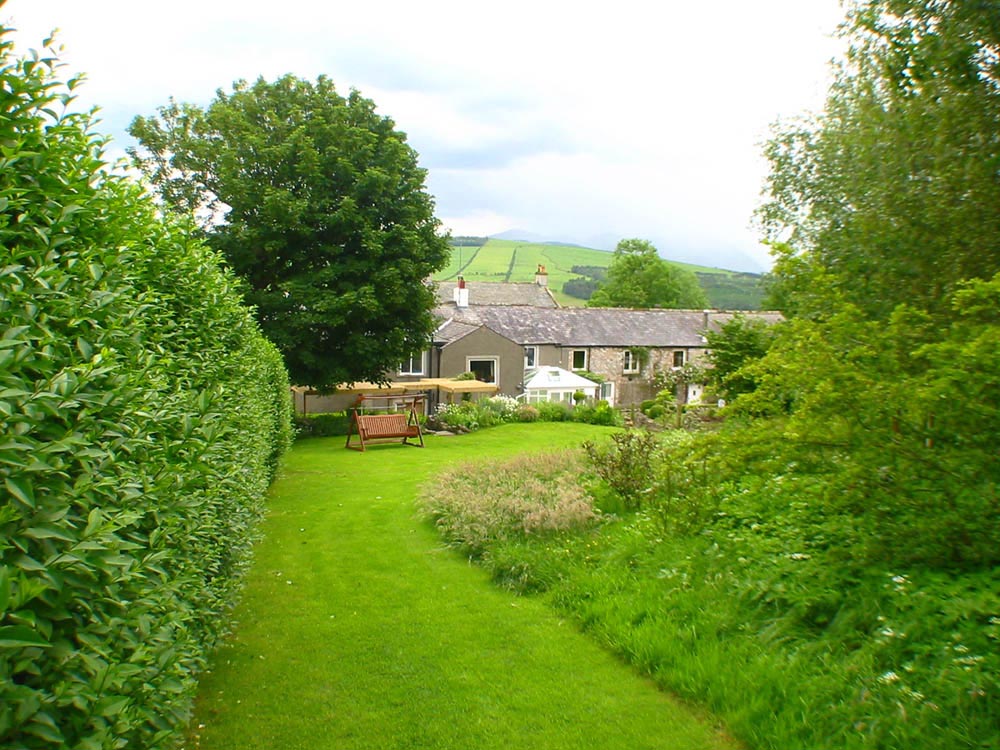
The garden soil varies from very little soil over limestone at the top, to loamy in the
vegetable garden (mostly engineered) to thick clay and stone towards the house. |
|
|
It is a natural garden designed to enhance the environment for all wildlife – as well as being beautiful I hope. It still amazes me sometimes, sitting in the garden watching the large number of birds that have made their home here – robins, song thrushes, mistle thrush, great tits, tree creepers, nuthatches, bluetits, sparrows, woodpeckers, housemartins, wren, dunnock, finches and barn owls. We also see buzzards overhead, listen to the lilting call of the curlew and watch the kestrel dive for voles |
|
over the meadow. One evening, at dusk. As I was walking Rosie the dog to the top of the field, I thought I saw a corncrake silhouetted against the long grass in the meadow. I couldn’t determine the colours as the setting sun was right behind it, but the outlines looked correct. It disappeared back into the long grass and I haven’t spotted it since – but I keep looking! With fears for the declining numbers of bees, it is good to know that I have at least two bees nests in the garden, and I do enjoy watching them |
|
|
scramble in and out of their nests at the base of the big old sycamore trees. I have identified at least four different species here in the garden. Now, in 2010, the garden is mature and how I envisaged it. Even though we own the freehold of this land, we only ever pass through but while we are here we very much enjoy sharing this beautiful place with everyone who comes to visit.
|
|
|
Christine Neale, Redmain House, Redmain, Cockermouth, Cumbria CA13 0PZ Tel:01900 825695 chris@lakesnw.co.uk www.lakesnw.co.uk Copyright © 2010 [Country Ayres]. All rights reserved. |
||